 WhatsApp Us (24/7)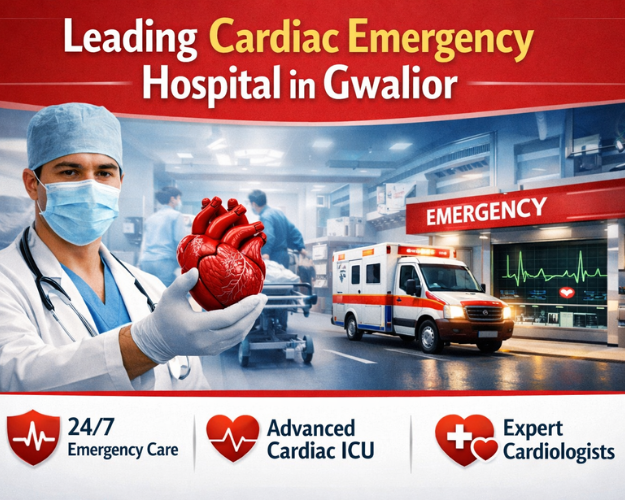
ITM Hospital and Research Centre – Leading Cardiac Emergency Hospital in Gwalior
Jan 21, 2026Finding prompt, reliable heart-attack care in Gwalior can mean the difference between life and death. If you are searching for a “cardiac emergency hospital Gwalior”, you need clarity: where to go, what services to expect, and how quickly you can reach expert care. At ITM Hospital and Research Centre, we understand the urgency — that’s why we offer a comprehensive cardiac emergency program designed for Gwalior patients in critical need.
In this guide, we explain what to look for in a cardiac emergency hospital, why local accreditation and facilities matter, and how you can prepare to act quickly in a heart crisis.
Why Gwalior Needs Strong Cardiac Emergency Infrastructure
Heart disease is among the leading causes of sudden medical emergencies across India. In a city like Gwalior, with its growing urban population and changing lifestyles, timely intervention becomes even more critical.
Local directories and listings mention a handful of heart-care centres in Gwalior. But many of these entries lack detail about emergency readiness — like presence of Cath Labs, ICU, ventilators, or trained cardiac emergency teams. That’s where a hospital like ITM can stand out: by combining robust infrastructure, accreditation, and readiness 24/7.
What to Look For in a Cardiac Emergency Hospital in Gwalior
Here are key factors you should check when choosing a heart-emergency hospital in Gwalior:
1. 24/7 Emergency + Cardiac ICU + Cath Lab Support
A hospital must have a dedicated emergency department, a cardiac-ICU (CCU/ICCU), and a cath lab (for angiography, angioplasty, stenting). This ensures that patients with acute coronary syndrome (heart attack) receive immediate diagnostics and treatment.
For instance, BIMR Hospital’s cardiac centre offers exactly these facilities.
2. Skilled Cardiologists & Cardiac Surgeons on Call
Emergencies demand experienced cardiologists, interventional cardiologists and surgeons — trained for interventions like angioplasty, pacemaker implantation, and emergency bypass if required.
3. Critical Care Infrastructure: ICU Beds, Ventilators, Diagnostics
Comprehensive critical-care capability (ICU beds, ventilators, labs, imaging) is essential. Hospitals with integrated blood-bank, lab, radiology, and life-support systems significantly improve outcome chances.
4. Accreditation & Quality Assurance
National-level accreditation (like NABH/NABL) reflects adherence to standards, hygiene, protocols, and patient safety. BIMR Hospital is the first in the Gwalior-Chambal region to get both NABH and NABL accreditation.
5. Accessibility & Local Trust
A cardiac emergency hospital in Gwalior must have quick ambulance support or easy directions. It should be known locally by patients and caregivers. Transparency, trust and responsive staff make a big difference in a cardiac crisis.
Why Choose ITM Hospital and Research Centre for Cardiac Emergencies in Gwalior
(This is where you introduce ITM — positioning it as a top choice.)
1. Dedicated Cardiac Emergency Unit: Designed to respond rapidly to heart-attack symptoms — chest pain, breathlessness, arrhythmia, etc.
2. 24×7 ICU and Life-Support Systems: For stabilizing patients and providing ventilator, monitoring, and critical-care support.
3. Planned Cath-Lab & Interventional Services: For angiography, angioplasty, stent placement — essential for timely heart-attack treatment.
4. Experienced Cardiologists & Cardiac Surgeons: Capable of handling acute emergencies as well as advanced procedures.
5. Local Trust & Availability: For people in Gwalior and nearby regions — no need to travel far during a crisis.
We believe every second counts in a cardiac emergency. At ITM Hospital, our team is prepared to act fast — save precious time, and save lives.
What Happens When You Visit — Step by Step Emergency Protocol
Here’s roughly how care proceeds when a heart-attack patient arrives:
1. Triage & Emergency Evaluation: The emergency team assesses vital signs, ECG (electrocardiogram), oxygen levels, and medical history.
2. Stabilization in Cardiac ICU: If needed, oxygen support, monitoring, medications to manage pain or arrhythmia, and continuous observation.
3. Diagnostic Testing & Cath-Lab Activation (if needed): Angiography to check for blocked arteries; if blockage found — angioplasty / stent / bypass.
4. Intervention by Cardiology Team: Angioplasty / stenting / pacemaker or bypass surgery as determined by cardiologist/cardiac surgeon.
5. Post-Procedure Intensive Monitoring & Rehabilitation: Critical care, medication, follow-up instructions.
This streamlined flow matters — especially in situations where every minute counts.
How to Act — What You Should Do Right Now (if you or a loved one has cardiac symptoms)
1. Do not delay. If there’s sudden chest pain, shortness of breath, heaviness, sweating — call emergency services or head to the nearest cardiac emergency hospital fast.
2. Keep important information ready: Prior medical records, medication history, mobile number, a family member/attendant for support.
3. Have contact details handy: For example, ITM Hospital’s emergency desk or local ambulance.
4. Use insurance or health schemes (if applicable): Discuss with hospital billing desk to know what’s covered.
If you are in Gwalior right now — don’t wait. Every minute matters.
Benefits of Choosing a Good Local Cardiac Emergency Hospital
1. Faster treatment — no long travel: Crucial in “golden hour” after heart attack.
2. Comprehensive care under one roof: Diagnostics, ICU, surgery, ICU recovery — smoother for patient and family.
3. Lower stress for patients/attendants: Familiar locality, easy transport, local support.
4. Affordability vs. big-city hospitals: Good care at reasonable cost compared to metropolitan heart hospitals.
5. Post-care follow-up and accessibility: Easier for check-ups, follow-up angiograms, cardiac rehab — all in Gwalior.
FAQ — Common Questions from Residents of Gwalior
Q1. Which hospital should I call for cardiac emergency in Gwalior?
If you suspect a heart attack, you can head to a cardiac-emergency hospital like ITM Hospital (or other reputed hospitals with Cath-Lab and ICU). Ensure the hospital has 24×7 cardiac emergency services, ambulance support, and experienced cardiologists.
Q2. What is the typical cost for heart attack treatment or bypass surgery in Gwalior?
Costs vary widely depending on procedure complexity. As a ballpark, open-heart surgery in Gwalior may range from ₹4.1 lakhs to ₹7.4 lakhs. Always consult hospital billing directly for current estimates.
Q3. What services should a cardiac emergency hospital offer?
At minimum: 24/7 emergency, cardiac ICU, cath lab for angiography/angioplasty, ventilator and life-support systems, skilled cardiologists/cardiac surgeons, diagnostics (ECG, labs), and ICU/critical-care support.
Q4. How can I prepare in advance for a heart emergency at home?
Keep phone numbers of local cardiac hospitals, ambulance services. Know basic heart-attack signs (chest pain, breathlessness, sweating). Keep medical history and medications handy. Reach hospital immediately — every minute counts.
Conclusion
Having a trusted cardiac emergency hospital in Gwalior can dramatically improve outcomes for patients experiencing heart attacks or other acute heart conditions. Through rapid response, comprehensive diagnostics, expert cardiology care, and critical-care infrastructure — a hospital like ITM can stand between uncertainty and recovery.
If you or a loved one feels alarming chest pain or any cardiac symptoms — don’t wait. Visit or call immediately. Save precious time. Your heart deserves the best care, right here in Gwalior.

