 WhatsApp Us (24/7)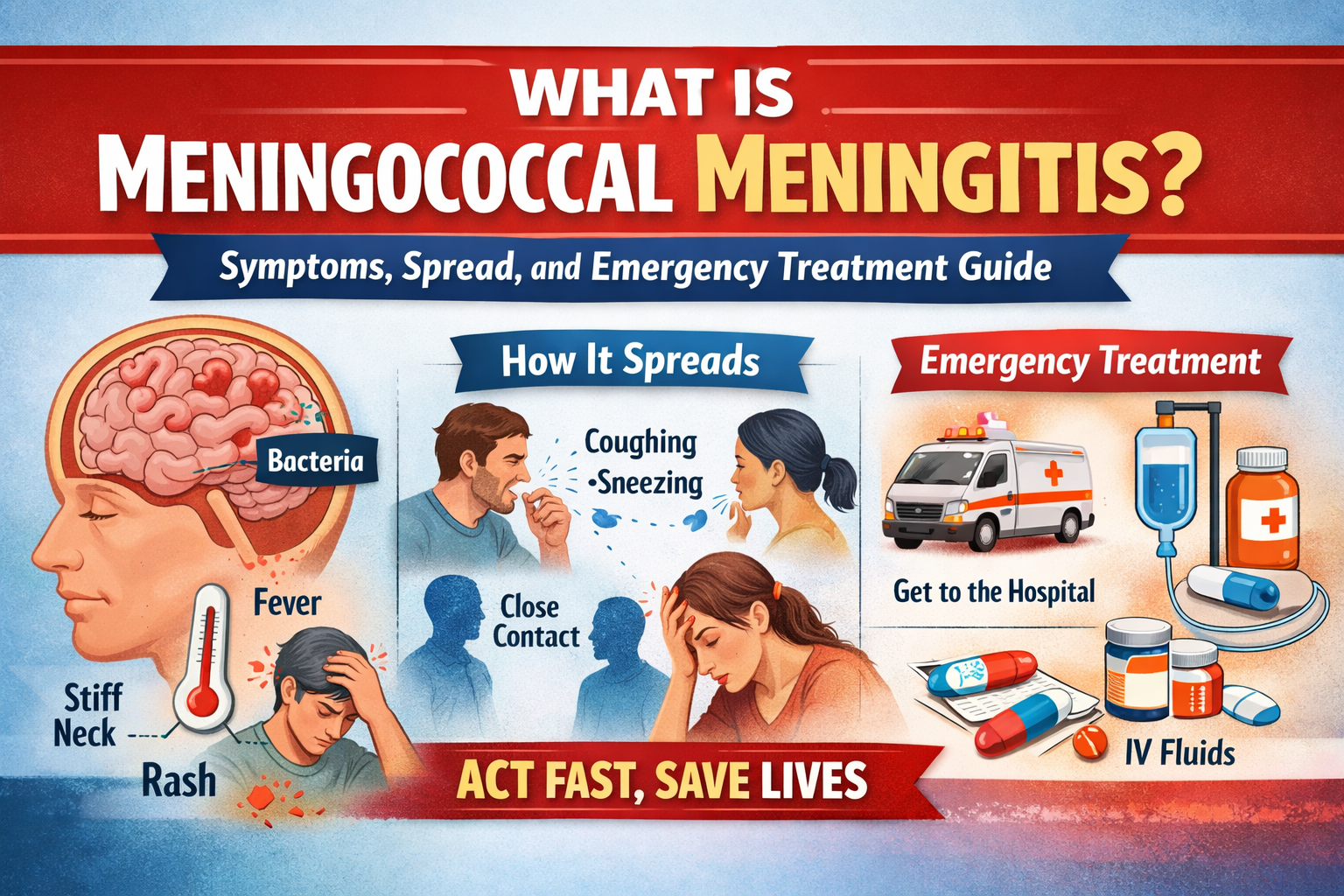
What is Meningococcal Meningitis? Symptoms, Spread, and Emergency Treatment Guide
Mar 31, 2026Meningococcal meningitis is a sudden, life-threatening infection of the brain’s lining caused by the bacterium Neisseria meningitidis. It can progress very rapidly (“deadly in hours”). Early recognition, prompt antibiotic treatment, and vaccination are critical. This article provides a comprehensive overview of the disease: its causes, symptoms, and how it spreads; the current outbreak context globally (including Africa and recent US and Indian reports); diagnostic and treatment strategies (emphasizing not to delay antibiotics); and prevention measures including vaccines, chemoprophylaxis for contacts, and community hygiene. We also offer guidance for patients, caregivers, and healthcare workers on when to seek care, and infection control.
What is Meningococcal Meningitis?

Meningococcal meningitis is an infection caused by the bacterium N. meningitidis that inflames the membranes around the brain and spinal cord. These Gram-negative diplococcal bacteria often live harmlessly in the back of the nose and throat (about 1 in 10 people carry them). When they invade deeper into the body, they can cause serious disease. There are several serogroups of N. meningitidis (A, B, C, W, X, Y) with different geographic patterns. Any age can be affected, but infants, adolescents, and people with weakened immunity (e.g. HIV) are at higher risk. Close contact and certain settings (crowded dorms, military barracks, or mass gatherings) raise the risk.
Symptoms and Transmission
Symptoms of meningococcal meningitis often start like the flu but worsen quickly. Common early signs include high grade fever, severe headache, neck stiffness, confusion or lethargy, nausea/vomiting, and sensitivity to light. A distinctive non-blanching rash (that doesn't fade under pressure) can appear if the bacteria enter the bloodstream, indicating sepsis. Infants and young children may instead show irritability, poor feeding, a bulging fontanelle, or unusual crying. Because symptoms evolve rapidly, any sudden onset of fever with stiff neck or rash should prompt urgent evaluation. The bacteria spread person-to-person through respiratory droplets and throat secretions – for example, via coughing, sneezing, or kissing. Prolonged or close contact (household contacts, friends, or dormitory roommates) is usually required for transmission. Meningococcal outbreaks are more likely in crowded settings and mass gatherings.
Outbreak Context: Global and Local Updates
Meningococcal outbreaks happen worldwide. Large epidemics occur most often in Africa’s “meningitis belt” (from Senegal to Ethiopia), where serogroup A used to cause 80–85% of outbreaks before the introduction of mass vaccination. Mass gatherings (e.g. the Hajj pilgrimage) have also been linked to spread of serogroup W globally. WHO notes that the South-East Asia region accounts for about 27% of global meningitis cases and 19% of deaths, underscoring regional vulnerability. In recent years, the United States has seen a rise in meningococcal cases: U.S. incidence more than doubled from 2019 to 2023 (503 cases reported in 2024, the highest since 2013), driven largely by serogroup Y. Higher-risk groups in the U.S. include adults 30–60, African American people, and people with HIV.
In India, meningococcal disease is endemic but usually sporadic. Historical outbreaks (e.g. Delhi 1985–86, Surat 1985) involved thousands of cases mostly from serogroup A. The last major documented outbreak in India was in 2018 (about 96 cases). Currently there are no reports of a new local epidemic; however, clinicians in India continue to watch for cases during the dry season. As standard public health practice, any cluster of suspected meningitis (especially with characteristic rash) is investigated quickly by local health authorities.
Diagnosis and Treatment
Meningococcal meningitis is a medical emergency. If it is suspected, hospital evaluation should begin immediately. Diagnosis typically involves a lumbar puncture (spinal tap) to obtain cerebrospinal fluid (CSF) for laboratory testing. Blood cultures or PCR tests are also done. However, do not delay antibiotic treatment while awaiting test results. Empiric IV antibiotics (usually a third-generation cephalosporin) are given as soon as meningitis is suspected. Penicillin or chloramphenicol are alternatives if resistance is low or as guided by labs. In non-epidemic (high-resource) settings, a single dose of dexamethasone is often given with the first antibiotic dose to reduce inflammation and prevent complications. Patients are admitted for close monitoring; many require intensive care.
Public health measures run in parallel: any suspected case must be reported to health authorities without delay. Close contacts (household members, intimate partners, daycare contacts, etc.) should receive post-exposure prophylaxis (PEP) – typically rifampin or ciprofloxacin (adults) or ceftriaxone– ideally within 24 hours of case identification. PEP eradicates the meningococci from carriers and helps stop the outbreak. Healthcare workers exposed to an untreated patient should also get PEP regardless of their vaccination status.
Prevention: Vaccines, Chemoprophylaxis, and Public Health
Vaccination is the cornerstone of meningococcal prevention. Multiple vaccines are available: conjugate polysaccharide vaccines (MenACWY) cover serogroups A, C, W and Y, and protein-based vaccines cover serogroup B. A new pentavalent conjugate (MenABCWY including serogroup X) has been prequalified by WHO for Africa. *New vaccines combining MenB with conjugate ACWY (e.g. clinical trials) and the WHO-approved MenABCWY pentavalent are expanding options.
All countries with vaccination programs target infants and children. CDC recommends routine MenACWY for all adolescents and MenB based on shared decision making for 16–18 year-olds. In outbreak situations, additional or earlier doses may be given.
In addition to vaccines, outbreak control relies on surveillance, hygiene, and prophylaxis. People living with someone diagnosed with meningitis should wash hands frequently, avoid sharing utensils or cigarettes, and consult a doctor about antibiotics as a precaution. During community outbreaks, mass vaccination campaigns are sometimes organized. Finally, long-term strategies (in line with the WHO 2030 roadmap) emphasize building robust reporting systems and improving access to affordable vaccines.
Guidance for Patients, Caregivers, and Healthcare Workers
Patients/Caregivers: If you or someone in your care develops symptoms like sudden fever, severe headache, neck stiffness, confusion, or a rash, seek medical care immediately. Meningitis can worsen within hours, so do not wait. Caregivers should be alert to symptoms in infants (e.g. inconsolable crying, bulging fontanelle) and ensure the child sees a doctor. Keep patients comfortable and avoid dehydration (small sips of water if awake). Inform the doctor of any recent travel or exposure to infected individuals.
After a diagnosis, follow doctors’ advice closely. Close contacts will be offered preventive antibiotics (such as rifampin or ciprofloxacin); ensure they complete the full course. Make sure household members are up-to-date on their meningococcal vaccines. Maintain good hygiene: clean shared surfaces and avoid close face-to-face contact with the sick person as much as practical. After recovery, monitor for any lasting effects (e.g. hearing loss, difficulty concentrating) and ask the hospital about follow-up care or rehabilitation if needed.
Healthcare Workers (HCWs): Use droplet precautions for any patient with suspected meningococcal disease: wear a surgical mask within 3 feet of the patient and isolate them in a private room if possible. HCWs performing high-risk procedures (intubation, airway suction) should use N95 respirators. All HCWs who have close contact with a case before effective antibiotics should receive antibiotic prophylaxis. Healthcare personnel diagnosed with meningococcal infection must be excluded from work until 24 hours after starting treatment. Routine vaccination is not required for all staff, but ACIP recommends MenACWY vaccination for laboratory workers exposed to meningococcus and others with specific risks. Finally, support families by providing clear instructions on home care and contacting public health for contact management.

